
Looking for Pilates in Markham that is more than a fitness class?
At Form & Function, our physiotherapist-guided Pilates program combines the precision of clinical physiotherapy with the controlled resistance of Pilates reformer training. This is a one-on-one rehabilitation approach designed to help you improve core strength, posture, flexibility, balance, and movement control while working safely around your injury history.
Whether you are recovering from low back pain, neck pain, hip or knee issues, post-surgical weakness, pelvic floor concerns, postpartum changes, or recurring sports injuries, our team can help you rebuild strength with proper guidance.
Book your physiotherapy Pilates assessment today.
What Is Physiotherapist-Guided Pilates?
Physiotherapist-guided Pilates, also known as clinical Pilates, is a rehab-focused approach where your exercises are selected, modified, and progressed by a physiotherapist.
Unlike a general Pilates class, your session is built around your body, your diagnosis, your pain levels, and your goals. Your physiotherapist will assess how you move, identify areas of weakness or compensation, and guide you through exercises that improve control, strength, mobility, and confidence.
At Form & Function Markham, we use a Pilates tower reformer as part of your treatment plan when it fits your recovery goals. The reformer uses adjustable spring resistance, allowing your physiotherapist to support, assist, or challenge your movements depending on your stage of rehab.
This makes it a great option for people who need a safer, more controlled way to exercise.
Why Choose Clinical Pilates Instead of a Regular Pilates Class?
A regular Pilates class can be excellent for general fitness, but it may not be specific enough if you are dealing with pain, injury, surgery, pelvic health concerns, or movement limitations.
Our physiotherapist-guided Pilates is different because it is:
One-on-one and personalized Every session is based on your assessment, symptoms, goals, and current ability.
Clinically guided Your physiotherapist understands injuries, pain patterns, biomechanics, and how to progress exercises safely.
Rehab-focused The goal is not just to “work out.” The goal is to help you move better, reduce compensation, build stability, and return to daily life or sport with more confidence.
Adjustable to your body The reformer allows us to change resistance, support, range of motion, and exercise difficulty in real time.
Better for people who need structure If you are not sure what exercises are safe, or you have tried gym workouts and flared up your symptoms, this gives you a more guided starting point.
Insurance Covered
One of the biggest advantages of physiotherapist-guided Pilates is that it may be covered under your extended health benefits when it is part of a physiotherapy treatment plan.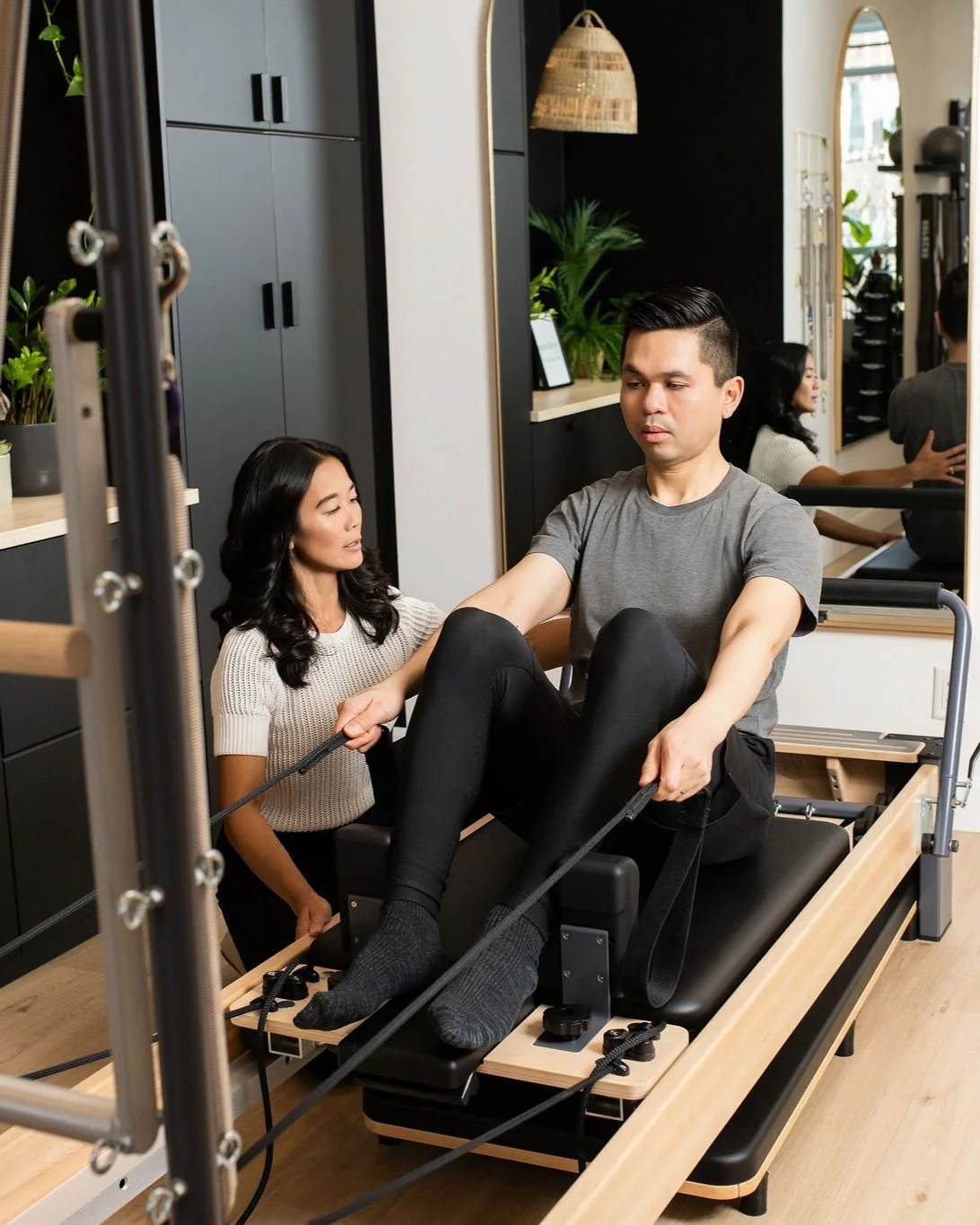
Conditions That May Benefit From Physiotherapy Pilates
Physiotherapist-guided Pilates may be helpful for:
- Low back pain
- Sciatica
- Neck and shoulder tension
- Postural strain from desk work
- Hip, knee, and ankle injuries
- Shoulder injuries
- Core weakness
- Pelvic floor dysfunction
- Diastasis recti
- Prenatal and postpartum recovery
- Post-surgical rehabilitation
- Balance and coordination issues
- Sports injury recovery
- Recurring stiffness or movement compensation
A proper assessment helps determine whether Pilates reformer rehab is the right starting point or whether hands-on treatment, manual therapy, strengthening, or another approach should come first.
A Smarter Way to Rebuild Core Strength
Many people think core strength means doing more planks, crunches, or gym exercises. But if your deep core, pelvic floor, hips, and spine are not coordinating properly, those exercises can feel frustrating or even aggravate symptoms.
Clinical Pilates focuses on better movement quality.
Your physiotherapist may use the reformer to help you:
- Activate your deep core muscles
- Improve pelvic and spinal control
- Strengthen your hips and glutes
- Improve posture and alignment
- Build better breathing and rib control
- Reduce overuse of the neck, back, or hip flexors
- Improve flexibility without forcing painful positions
- Rebuild confidence with movement
The goal is to help your body work as a connected system again.
Great for Posture, Desk Workers, and Back Pain
If you sit for long hours, work at a computer, commute, or feel constantly tight through your neck, shoulders, hips, and low back, physiotherapist-guided Pilates can help address the underlying movement patterns that contribute to stiffness and pain.
Instead of only treating the painful area, we look at how your spine, hips, ribs, pelvis, and shoulders move together.
This can be especially helpful for people who feel better after treatment but keep having symptoms return because the underlying strength and control have not been rebuilt.
Women’s Health, Prenatal, and Postpartum Pilates Rehab
Physiotherapist-guided Pilates can be especially useful for women’s health and pelvic health rehabilitation.
For prenatal and postpartum patients, the reformer provides a controlled environment where exercises can be adjusted for comfort, safety, and stage of recovery.
This may support:
- Postpartum core rebuilding
- Diastasis recti rehab
- Pelvic floor coordination
- Hip and pelvic stability
- Low back and pelvic girdle pain
- Return to exercise after pregnancy
- Safe strength building during pregnancy when appropriate
Your physiotherapist will guide breathing, core engagement, pelvic floor coordination, and movement control so you are not guessing what is safe.
What to Expect During Your First Visit
Your first visit starts with a physiotherapy assessment. We will review your symptoms, health history, activity goals, movement patterns, strength, mobility, and any areas of pain or limitation.
From there, your physiotherapist will determine whether reformer-based Pilates is appropriate for your treatment plan.
Your session may include:
- A focused physiotherapy assessment
- Movement and posture screening
- Hands-on treatment if needed
- Guided reformer exercises
- Core, hip, spine, or pelvic control work
- A personalized exercise plan
- Progressions based on your response
Sessions are typically 45 to 60 minutes and are completed one-on-one with your physiotherapist.
Wear comfortable clothing that allows you to move.
Is This Covered Under Physiotherapy Benefits?
Because this is provided as part of a physiotherapy treatment plan by a physiotherapist, it may be eligible under physiotherapy benefits depending on your insurance plan.
We also offer direct billing to many insurance providers.
Please check your individual plan for coverage details.
Who Is This Best For?
Physiotherapist-guided Pilates may be a good fit if you:
- Want a safer way to exercise after injury
- Have recurring back, neck, hip, or knee pain
- Feel weak, stiff, or unstable
- Want to improve posture and core strength
- Are returning to sport or activity
- Are postpartum and unsure how to rebuild safely
- Have tried generic exercises but need more guidance
- Want one-on-one attention instead of a group class
Who May Need a Different Starting Point?
Pilates reformer rehab is not always the first step for everyone.
You may need a different approach first if you have severe pain, acute inflammation, significant dizziness or balance concerns, neurological symptoms, or if you are not yet able to tolerate guided movement.
That is why we always recommend starting with a physiotherapy assessment.
Why Choose Form & Function in Markham?
Form & Function is a multidisciplinary rehab and wellness clinic located in Markham, inside a large health and performance facility.
Our team combines physiotherapy, chiropractic care, massage therapy, acupuncture, chiropody, pelvic health, rehab exercise, and performance-based care under one roof.
Patients choose us because we focus on more than short-term pain relief. We help you understand your body, rebuild movement, and create a plan that supports long-term function.
Our clinic offers:
- One-on-one physiotherapist-guided care
- Pilates tower reformer rehab
- Personalized treatment plans
- Direct billing to many insurance providers
- Convenient Markham location near Warden and Highway 7
- A large rehab and performance facility
- Support for injury recovery, posture, pelvic health, sports rehab, and long-term strength
Unlike a standard, fast-paced fitness class, every single movement in our clinic is carefully selected, monitored, and modified to suit your specific injury history, biomechanics, and rehabilitation goals. Whether you are dealing with chronic lower back pain, recovering from a complex injury, or simply looking to improve your posture safely, our one-on-one guided approach ensures you move with precision and without pain.
Our Physiotherapist-Guided Pilates program provides a safe, low-impact environment focused on:
-
Core & Pelvic Floor Stabilization: Activating the deep stabilizing muscles of the abdomen, lower back, and pelvic floor to create a strong foundation and protect your spine.
-
Spinal & Joint Rehabilitation: Safe, highly targeted movements tailored for conditions like herniated discs, sciatica, whiplash, or post-surgical joint recovery.
-
Postural Correction: Actively reversing the negative effects of prolonged sitting and desk work by lengthening tight muscles and strengthening crucial postural stabilizers.
-
Pre & Postnatal Safe Exercise: Specially modified Pilates routines to safely maintain core strength during pregnancy and effectively rebuild the abdominal wall (Diastasis Recti) and pelvic floor postpartum.
-
Enhanced Flexibility & Body Awareness: Improving joint mobility and teaching your brain how to recruit the right muscles at the right time to prevent future injuries.