Welcome SONIA VOVAN

sonia vovan, physiotherapist markham

I would like to officially welcome Sonia Vovan to our rehab team.  Sonia has recently graduated from the University of Toronto with a Masters in Physiotherapy, and will be taking on new patients starting this week.  Sonias  hours are Tue/Thurs 9-7.30 and Sat 9-2.  For Sonia’s full bio please click here 


Osteoarthritis

As a large number the Canadian population ages, osteoarthritis will become an increasingly common condition. Here is some information regarding osteoarthritis.

What is Osteoarthritis?
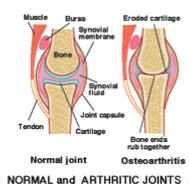
Osteoarthritis is a degenerative condition that involves the wear and tear of cartilage between joint surfaces leading to exposed bone on bone rubbing. It generally affects people in their 60s or 70s but can also occur in those 50s or younger. It most commonly affects weightbearing joints like knees, hips, neck and back.
Screen Shot 2013-09-19 at 10.13.28 AMSymptoms may include:
– Pain, especially prior to weather changes
– Stiffness in joints, especially in the morning
– Swelling
– Redness
– Feeling of heat around joints
– Loss of flexibility and mobility
– Tenderness
– Grating sensation between joint

Predisposing factors may include:
– Overweight
– Poor joint mechanics/alignment
– Prior joint injuries
– High impact or repetitive occupations
– Female sex
– Other conditions (like diabetes)
– Lack of regular exercise

Treatment of mild to moderate osteoarthritis involves tailored individualized exercise program that:
– Increase strength to protect the joint and minimize unnecessary rubbing between joints
– Increase or maintain flexibility to help keep joint fully lubricated
– Increase endurance to help increase ability to do functional activities
– Splinting or bracing to offset pressure on joint surfaces
Treatment of severe osteoarthritis often involves surgical intervention if conservative management is exhausted.

If you are experiencing osteoarthritic pain, come in to Form and Function to get assessed by one of our healthcare professionals. We can determine the state of your osteoarthritis and prescribe an individualized exercise program to help you minimize your pain and increase your function. Even if you are not currently experience pain, you may want to get assessed for proper biomechanics to help prevent the onset of osteoarthritis. Being proactive is much better than being retroactive!

Manni Wong
Registered Physiotherapist

Natural relief for menstrual cramps

Many women suffer for years from painful periods, a condition known as dysmenorrhea. Fortunately, there are several naturopathic therapies including acupuncture, nutritional changes and herbs that can help provide pain relief.

A study done on 120 females found here, demonstrated that women who consumed ginger root powder for 2 days before their period and the first 3 days of their period experienced less pain and shorter duration of pain than women who did not. Since menstrual cycles are a monthly occurrence, natural therapies such as ginger can be considered by women to decrease their dependence on pain medication.

Remember that in addition to pain relief, naturopathic medicine also helps to determine and treat the cause of painful periods, which is important for female reproductive and overall health.

Odette Bulaong ND

End of Summer Diet Clean up

Welcome to September! As we mark the end of summer and bbq season, a few of you may be unhappy with the scales! Fall is a wonderful time to get back to a healthy nutrition plan and shed bad habits and extra pounds. Here are a few basic tips to transition back to your healthy routine:
Increase your daily water consumption. 8 glasses a day is recommended to help detox and additional toxins you may have accumulated over the summer. Water will also help manage hunger cravings.
Include lean protein in your breakfast to help stabilize your blood sugar and set you up with energy for your day, a fruit smoothie made with yogurt, egg whites, or nuts and seeds added to oatmeal.
Increase fresh fruits an vegetables not only with your main meals but also as snacks to limit your intake of processed foods. Your daily consumption should be minimum 5, aim for 8-10!

Change your habits, replace your 3pm coffee or cookie with a brief walk or breath of fresh air.

Keep a food log. What you eat and what you think you have eaten often differ!

Schedule a Fall clean up with me and we will work together to create a Nutrition and Lifestyle Protocol just for you!

Get back to the gym and increase your exercise! Maintaining a healthy weight and lifestyle is much easier when exercise is part of the recipe.

In good health,

Mary


Flexibility vs Mobility


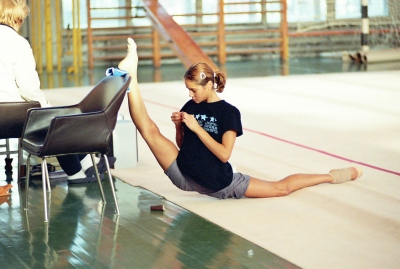
Flexibility-exercisesThe best way to think this one through is to imagine “flexibility” as your passive range of motion; it is how far you are able to bend forward .  This is usually limited to tonicity of the muscles, tendons, ligaments, fascia, scar tissue and joint capsules.

Mobility on the other hand is how you function within that range of motion.  Just because you have good passive range of motion, it does not mean that you are capable of functioning optimally within that range.

Always build mobility as well as flexibility.


How well do you warm up

What do you do when you warm up?

Studies now show that dynamic warm ups (DWU) are better than static stretching (SS) and no warm up (NWU).  DWU have been shown to decrease injury rates and performance compare SS and NWU groups.  Conversely, some studies have shown that static stretching can decrease performance on tasks such as vertical jump.

Dynamic warm ups should feature progressive and continuous movements.  The goal of a DWU should be to: increase the suppleness of muscles and tendons, increase blood flow to the arms and legs, increase body temperature and enhance free coordinated movement.

An example of a dynamic warm up  can be body weight movements where intensity is progressively increasing.  For example, squats, airplanes, lunges, pushups, step ups, jumping jacks.  These exercises can also be paired with running drills – i.e. Track A’s, B’s, C’s.

Dr. Paul

Importance of Proprioception in Rehab

What is it?
Proprioception is the sense of relative position between joints and body parts. This sense allows us to know where our limbs are in space subconsciously. It is very important in all every day movements but it is especially important in sports where often complicated, precise and coordinated movements are required.

How does it work?
Proprioception system is made up of sensory receptors in our muscles, tendons and joints. These sensory receptors pick up information regarding tension and stretch of tissues and send this information to your brain. The brain processes this information and automatically sense motor signals to adjust your muscles contraction or relaxation to achieve your desired movement.

Why is it important in rehab?
After an injury, especially if you have been immobilized, these sensory receptors can be impaired leading to a deficit in your proprioception system. Just like a muscle can shrink or atrophy from disuse, these sensory receptors can lose function if they are not being used. With an impaired proprioceptive system, your coordination is decreased leading to hindered athletic performance and a greater change of reinjury. It is the second injury following the initial injury that often causes more severe consequences.

There are ways of redeveloping your proprioception safely and it is a must if you sustained any lower limb athletic injury. Please feel free to contact the health care professionals at Form and Function to find out more about proprioceptive training following injury.

Manni Wong
Registered Physiotherapist