
Foam Rolling: Take care of your Tissues!

Foam rolling is a great tool for injury prevention and keeping our body’s tissues healthy.

Think of foam rolling like flossing your teeth. Why do we floss?
We floss to keep our gum tissues healthy and help clean out debris and junk from our teeth (joints).

This is what foam rolling does for our tissues (muscles and fascia) and can have a positive effect on our joints.

Our society has led us to often sedentary lifestyles with many of our hours sitting – at a desk or in our cars. As a result our tissues have become “tough”, “tight” and “restricted”.

Take care of your tissues! Try foam rolling for at least 15 mins a day – even if its while your watching TV.

If you need help or advice regarding different foam rolling techniques, come by Form & Function clinic. Our Athletic Therapist, Physiotherapist and Chiropractors would love to show you how. You can check out our previous video posts on foam rolling technique.
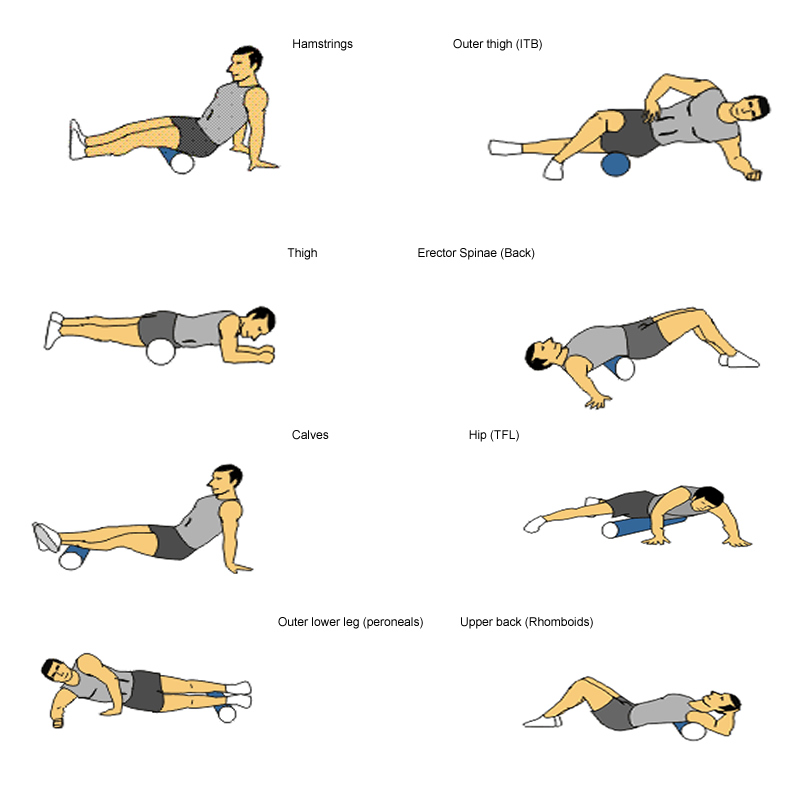
Foam_Roller_Exercises

Why Do We Have Cracked Heels?

Sometimes the skin on our heels are too dry  to the point where they split open and become painful.  If these cracks are left untreated, they can bleed and/or become infected.  The main cause of heel cracks and fissures is due to dehydration.   Other causes include:

1) cold, dry winters

2) hot and long showers and/or baths

3) using harsh soaps on your feet

4) if you have a particular condition such as diabetes

To prevent painful cracked heels, make sure to moisturize your feet, avoid taking hot showers and drink plenty of water to hydrate your skin.  If you continue to have issues with cracked and fissured heels, please make an appointment to see, Jennifer, the Chiropodist at the Form and Function Clinic.

Get up from your chair better


Make a tall proud chest before getting up.

When we sit we all get to that position of “comfort” where our pelvis rounds backward (or posterior tilt).  I tell my patient not to get up from position they have stressed their spine when sitting.  Making a tall chest or elongating the spine put the pelvis and spine in a better position.  This position allows your spine to distribute the load and you to have better access to use your gluts and core.


So before getting up make sure you have a proud chest or tall spine.

Get up from your chair better

Make a tall proud chest before getting up.

When we sit we all get to that position of “comfort” where our pelvis rounds backward (or posterior tilt).  I tell my patient not to get up from position they have stressed their spine when sitting.  Making a tall chest or elongating the spine put the pelvis and spine in a better position.  This position allows your spine to distribute the load and you to have better access to use your gluts and core.


So before getting up make sure you have a proud chest or tall spine.

Dr. Paul.

Get up and move!

In a modern society where most jobs are in front of a computer 8 hours a day, prolonged sitting has become prevalent in a lot of peoples lives. What’s wrong with sitting all day? Well, more and more studies are revealing that prolonged sitting increases risk of disease (diabetes, heart disease and cancer) EVEN if you exercise regularly. So, even if you are diligent and exercise before or after work, it seems that it will not to reverse the risks of prolonged sitting.

So moral of the story? Get up and move! Make sure you are never sitting for more than 30 minutes at a time. This also isn’t to say that sitting is bad. Everyone needs to sit and rest sometimes but prolonged sitting is the issue. Remember, motion is lotion so remember to get up and move!

Also, check out our previous post for some tips on avoiding prolonged sitting!

5 Tips to be fit while you sit!

active sitting

If you work at a desk for 8 hours a day, don’t let it ruin your body!  Sitting is the new smoking.  Sitting with improper posture or slouching for extended periods of time causes stress and physiological change to the body.  Some muscles weaken and become harder to activate while tension and reduction in length can occur in others.  Research has indicated that extended periods of sitting have been associated with obesity, cardiovascular disease, diabetes and bowel cancer.  Stay fit while sitting with these 5 tips:

1. Take the stairs. Make this a rule whenever and wherever you can.  It’ll force you to do some physical activity throughout your day.

2. Stand up and get a drink. Even if you’re busy throughout the day try and schedule yourself water breaks at set intervals to force yourself to get up and move around.

3. Roll your feet. Leave a ball or water bottle under your desk. Take your shoes off, and roll the bottom of your feet back and forth over the entire arch of your foot to help release tissue tension and improve blood flow to get that stiffness out.

4. Listen to your body! Simply being more in-tuned with your body will help you improve your posture throughout the day as you sit.  Your body will give you cues to move, listen to those cues and perform micro-movements to give your body some novel input as it demands it.  This can be as easy as posturing up or simply standing and reaching for the sky for a few seconds.

5. Stretch out those hips! when you sit for 8 hours a day, what happens is your hips remain in hip flexion the entire time.  What this does is create more of a sensory-motor amnesia where your body forgets the ‘feeling’ of moving through a full range of motion through the hip. Your muscles forget! As it is often said, if you don’t use it, you lose it!

Brace Yourself – Free Brace Fitting

BRACE YOURSELF

Do you have:

  • Unstable Knees?
  • Post Operative Knee Replacements?
  • ACL tear?

Form & Function is having a promotion for Brace Fitting.

Let one of our bracing specialists help you get moving today! We offer a wide selection of over the counter and custom made braces by industry leading brace companies.

Come in for a FREE BRACE FITTING!

For more information click the link — Custom Bracing


Fall Prevention for Seniors

Slips and falls are common this time of year but falls are not limited to icy conditions, especially in the senior population. Falls can occur year round and accounts for 84% of injury-related admissions to hospitals for seniors. It is also known that 90% of falls resulting in injury are preventable. Here are some tips to help prevent falls:

– Make sure both feet are on the ground before getting out of the car

– Use large and spiked tips on canes in icy conditions

– When going from sit to stand, take 10 seconds before allow for blood pressure to normalize and to minimize dizziness

– Review medications with your doctor to avoid dizziness, especially new medications

– Use good footwear (closed toed, laced up properly, with good support either through cushioning of the shoe or orthotics)

– Use handrails when available

– Use aids when necessary such mobility aids, hearing and sight aids and medical alert services

– Get an assessment of your strength and balance at Form and Function Clinic. We can provide exercises and further tips to help minimize your risk of falling.  Engaging in regular physical activity can increase strength, balance and endurance and thus prevent falls.

3 Healthy Heart Changes in 3 Weeks…Are you up to the challenge?

It is Heart Health Awareness Month and a fantastic opportunity to make healthier choices for you heart.

To help you, I have developed my first ever Healthy Heart Challenge and I am challenging myself and all of you to join me!

THE CHALLENGE: Make 3 heart healthy choices every day for 3 weeks. These lifestyle choices have been shown to decrease risk factors for developing heart disease.

  1. Eat 4 servings of fruits & vegetables daily.
  2. Eat 1 serving of nuts & 2 servings of healthy oil daily.
  3. Be physically active for 150 minutes over the course of 1 week.

These 3 choices were chosen for their effectivity & simplicity. With our busy lives, they can be anything but simple to follow through with. I thought the idea of a community challenge to help keep one another motivated would be a great way to make these changes more achievable.

THE REWARD: Reduce your risk of heart disease. Improve your overall health & well-being.

START DATE: Sunday, February 8th, 2015

END DATE: Saturday, February 28th, 2015

For complete details please follow this link.

I hope you join me in this challenge!

Good luck to you all,

Dr. Odette Bulaong, ND


TempoMandibular What? TMJ Disorders, neck pain and headaches

Try this.  Open your mouth as wide as you can.. now position your hand like you are trying to dump a bottle of water on your chest and try to fit the first 3 of your knuckles (index, 3rd and 4th finger) into your mouth. Can you do this? If not, consider the following:

Does your jaw click or pop from time to time?

Do you have any occasional bouts of jaw pain while chewing?

Persistent neck pain, headaches, and pain while chewing harder foods are all hallmarks of temporomandibular joint (TMJ) disorders.  Headaches, neck pain and jaw pain are intimately tied together and restriction or tightness in one area can cause pain to occur in another.  If this sounds like you, you may have an underlying TMJ dysfunction. TMJ issues are conditions that are affected by the group of muscles and the joint that controls motion at the jaw.

If you think you may have a TMJ issue come in for a complimentary consult or try your best to avoid: gum chewing, biting your fingernails, chewing pens, hard candy or gummies. It’ll only make it worse!