Risks of High Levels of Mercury

Mercury is one of those elements we are told to be careful of, but the question remains why? To answer this, we first need to examine what mercury is and how it gets into the foods that we eat.

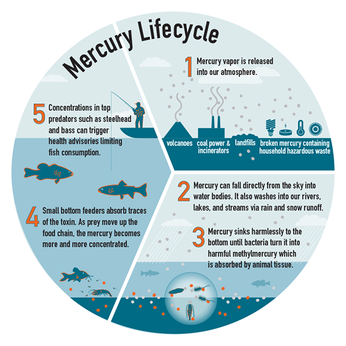
Mercury is a metal that comes in many forms. It is most commonly used for dental tools and manufacturing partials in factories but is predominantly present in the pollution we produce from emission gases.  When it rains, the water collects the metal and drains it in the same water. When it reaches the water, many fish absorb the element.

Now that we know what it is, we can look at the effect of having this metal in our system. Mercury directly affects our nervous system and heart.  Even small amount of mercury in infants can cause developmental issues. For this reason, women who are pregnant are not recommended to eat fish to ensure full nervous development of infants. In adults, it can weaken our immune systems and cause heart irregularities.
438311936

Some of you may be saying that our bodies will just digest the food and eliminate the Mercury – however, amounts greater then 40ml can stay in your system for 30-40 days making it very difficult for your body to quickly eliminate the element before it does damage.
Health Talk: The Core

Ever heard of someone telling you that they are “training their core.” Or have a fitness/rehabilitation professional tell you that you have a weak core? What does that mean? How do you strengthen it? Well, let’s talk about what the core is first of all.

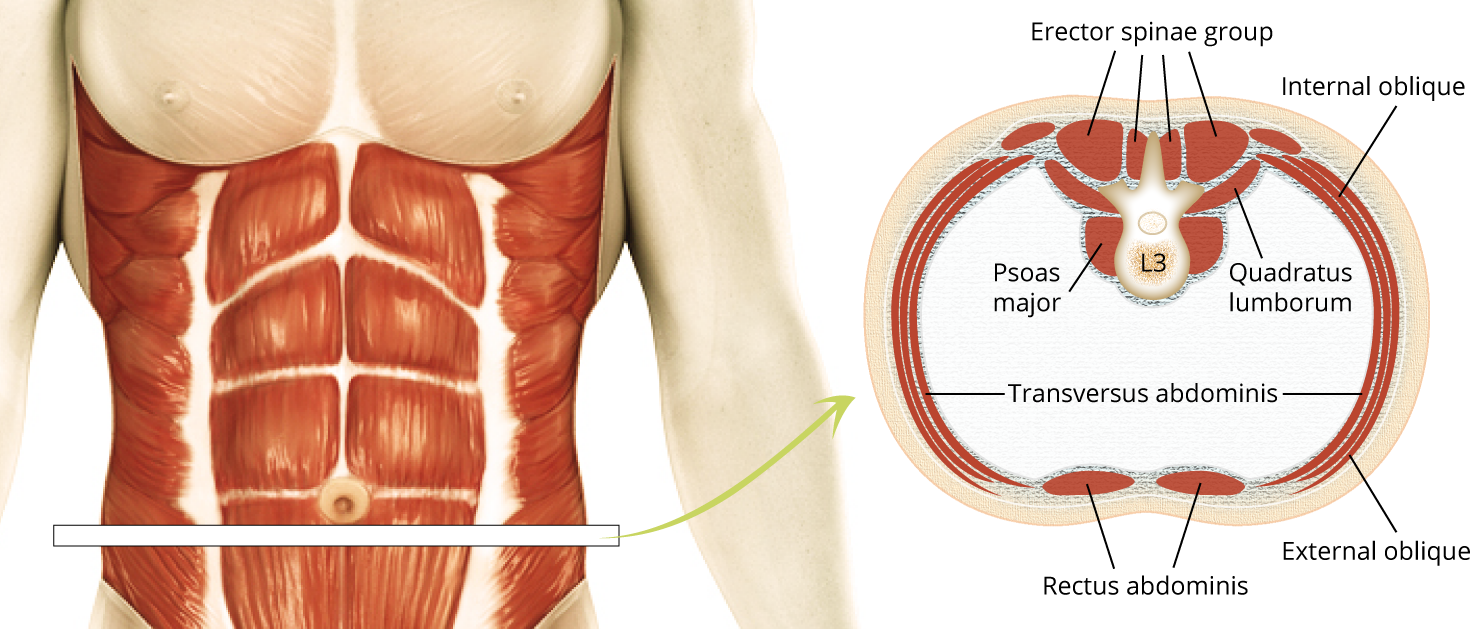
CoreTopView

What is the Core?

  • When professionals refer to the core, they are talking about a set of muscles around your stomach, back and hips. These include: rectus abdominus, internal and external obliques, transverse abdominus, quadratus lumborum and the gluteal. Collectively this group of muscles, when functioning correctly, is capable of creating a stable environment for the spine by using both strength and endurance to prevent excessive spinal movements. Basically, the core is designed to act as a platform from which your arms and legs push off of to create motion. Imagine if this platform (core) was very wobbly (ie weak); when you use your arms and legs, the wobbly platform will shake. This shaking can then cause your ligaments, joints and muscles to be overused or used improperly leading to injury.

How do I strengthen the Core?

  • There are several exercises that are great for building core strength and endurance. Because the core helps stabilize, you will notice these exercises hardly cause the spine to move. You will be either holding a position without movement or holding the core steady while moving your arms and/or legs. Here are the five exercises I prescribe for core training.
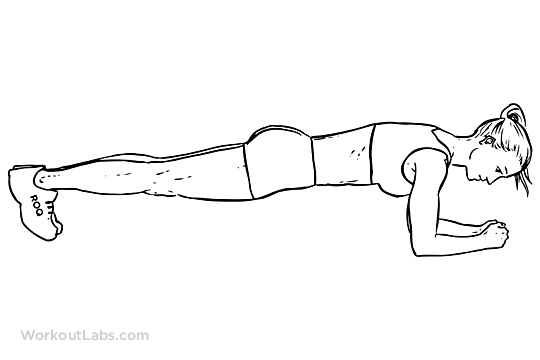
  • Plank
  1. Hold the plank position for as long as you can without feeling sore in the back. You should only feel your stomach muscles working. Try to do at least 3 sets of 30sec+. Work your way up to 60sec.

Plank_F_WorkoutLabs

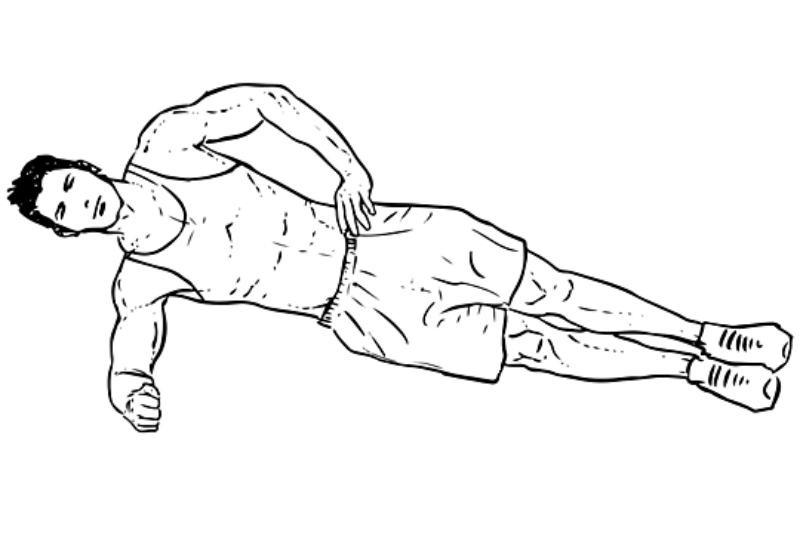
  • Side plank:
    1. Hold the side plank position for as long as you can. You should only feel your side stomach muscles working. Try to do at least 3 sets of 30sec+. Work your way up to 60sec.

Side-Plank

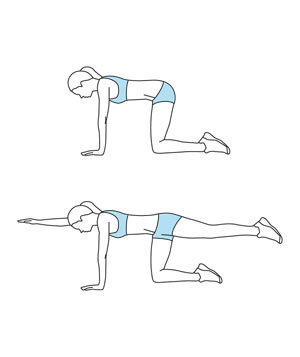
  • Bird dog:
    1. Lift up alternate arm and leg and hold in position without the core moving. If there was a small ball on your back during the exercise, it should not fall off. Hold that position for 5-10sec, and repeat on both sides 30 times.

abs-bird-dog_300

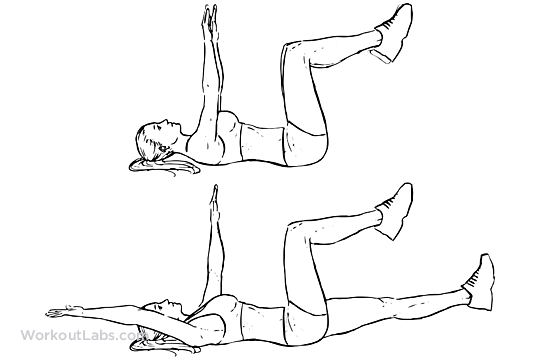
  • Dead bug:
    1. Start with both arms and legs in the air. Slowly lower alternate arm and leg to just above the floor and hold. Your back should not arch at all. If it does, bring your feet up slightly higher. Hold the position for 5-10sec, and repeat on both sides 30 times.

Dead_Bug_F_WorkoutLabs

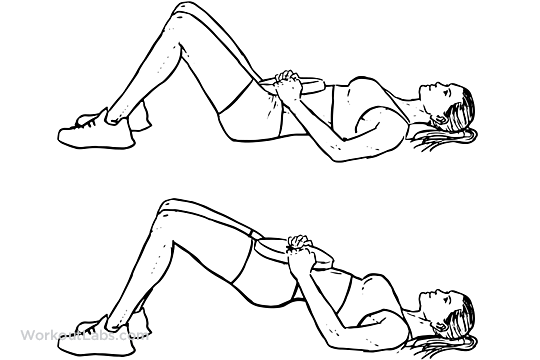
  • Glute bridge
    1. Lift your hips up off the floor with your feet planted shoulder width apart. Hold this position for 5-10sec and lower down. Repeat 30 times.

Weighted_Glute_Bridge-1


These exercises are but some that can strengthen your core. You can always consult the professionals at Form and Function clinic to progress these exercises once they become too easy or if you have any questions to start. Work on these exercises and you will lower the risk of future back pain episodes.

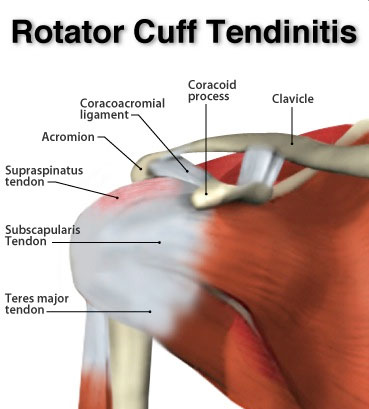
What is Rotator Cuff Tendinitis?

rotator-cuff-tendinitis

Rotator cuff tendinitis happens due to swelling or inflammation of tendons of the shoulder joint. This could happen due to any injuries like heavy lifting, pulling, pushing or any repetitive activities.

It is more common in people who play sports due to high impact activities.

Most of the athletes can regain full function depending of the extent of injury.

Symptoms: Pain and swelling of shoulder tendons, pain with outstretched arm or reaching behind the back , decreased ROMs and strength.

Physiotherapy treatments: Manual Therapy, Exercises and stretching will help to decrease pain and swelling. Electrotherapy helps to decrease swelling and pain.

Contact Form and Function today for your assessment!

Health Tip: Temporomandibular Joint Dysfunction

Do you have headaches, neck pain, ringing in the ears, or pain into the jaw/teeth?  Did you know your temporomandibular joint or jaw could be the cause?

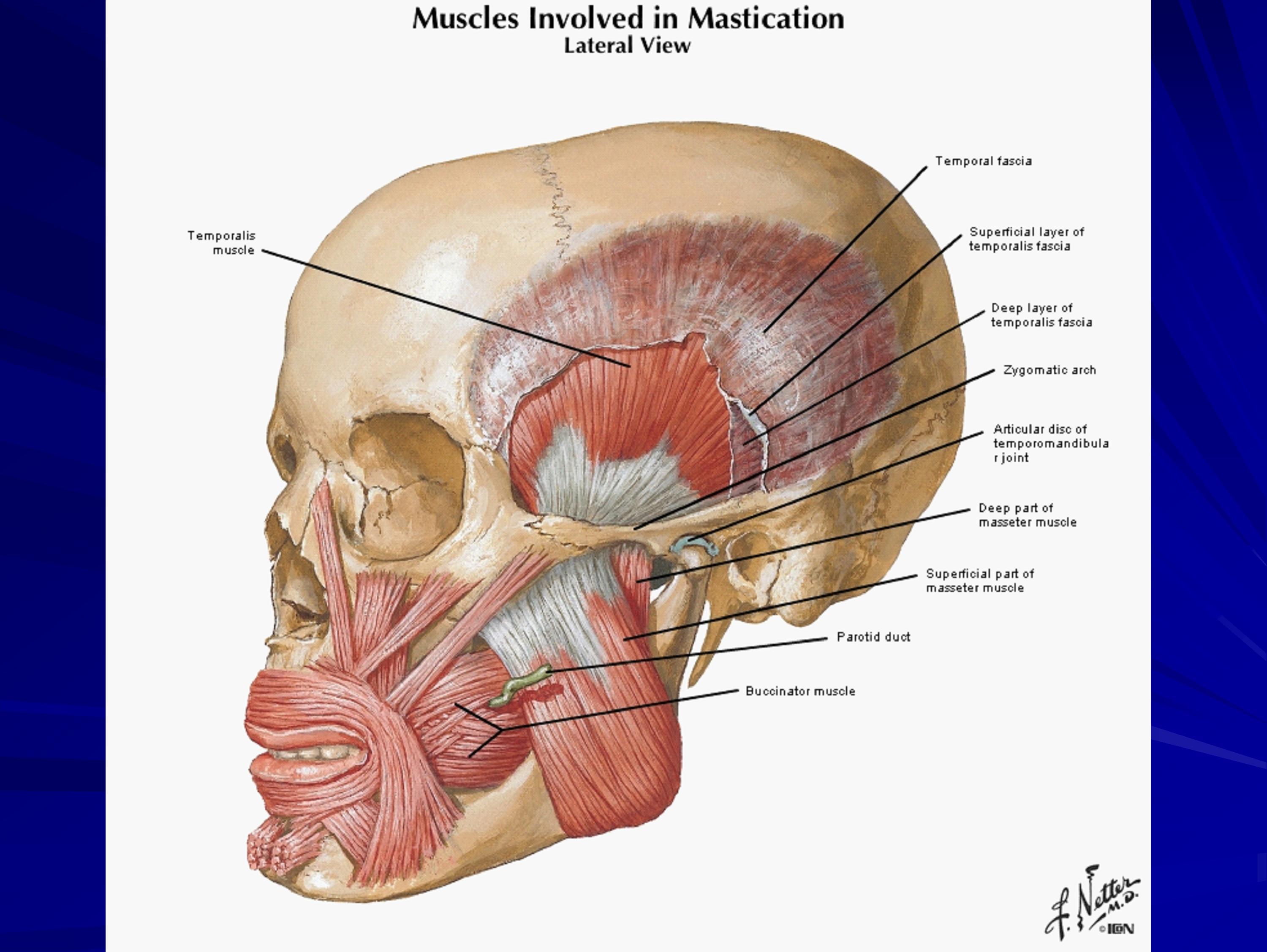
The temporomandibular joint (TMJ) or jaw joint is a two hinged joint that allows for complex movements to allow you to eat, talk, yawn and do things with your mouth.  You have two TMJ joints, one on each side of your head.  The TMJ is comprised of:

🔹Muscles of chewing

🔹Joint capsules

🔹Articular Discs
🔹Tissue behind the disc

tmjanatomy

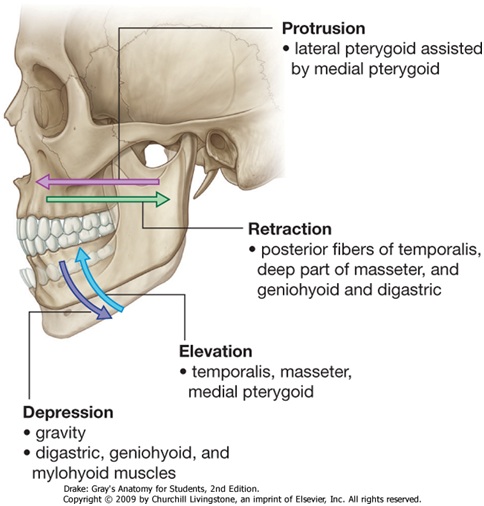
We will be assessing the following motions during a self assessment.  The jaw is quite complex and has four basic movements, each of which are required for proper function:

– Protrusion – jaw moves forward

– Retraction – jaw pulls backward

– Elevation – jaw rises

– Depression – jaw drops

jaw movements

The first question you can ask yourself is: Do I have a tempomandibular joint dysfunction (TMD)? The answer may be quite simple.  Answer the following questions and try this self assessment screen to see for yourself.

–  Is there any pain in your jaw?

Do you have headaches?

– Do you have neck pain?

– Do you have ringing in the ears?

– Do you have deep tooth pain (cleared by your dentist)

– Does your jaw tire easily while eating?

Try this self assessment:

– Look into the mirror

– Gradually open your mouth wide – can you open it as wide as 3 of your knuckles?

– Does your jaw shift one way? Does it shift back?

– Do you have a pop or click sound?

– Does one side feel tighter than the other?

These are all examples of things that you can see/feel when assessing yourself for a potential TMD.  If you notice you have any of the following, you may have a TMD!  Get yourself checked out and come in for a screen and we can see how well you function.  

Dr. Christopher Duong is a board-certified Chiropractor specializing in TMJ pain.  

Patcharee Bergsma is a Registered Massage Therapist and Thai Massage Therapist that performs TMJ massage on external TMJ muscles as well as Interior TMJ Muscles and joints

Book an assessment

Initial assessents will include a full physical and history taking of your TMJ issue.

The practitioner will provide a prognosis and treatment plan. Most insurance billing accepted

Book Appointment

Water After a Massage

massage16

We have all enjoyed the great benefits to massages, but most of us forget to drink water after being treated. Massages are dehydrating, kneading and working the muscles gets fluid pumping out of the soft tissue and into your circulatory system, where it heads toward your kidneys. That’s why many people have to pee right after a massage. You have to replenish all that lost water, by drinking more.
Then there’s the issue of metabolic waste which is produced by muscles in the course of everyday function. When your muscles are tight or you have a major knot, it constricts circulation in those areas inhibiting the body’s ability to flush out this waste. Since tight muscles are probably what prompted you to make a massage appointment in the first place, chances are you’ve got some compromised circulation happening. Massage relaxes the tension, releasing the circulatory pathways and allowing nitrogenous metabolic waste to dump into the system. Drinking provides your kidneys with the water they need to effectively eliminate the newly liberated waste.

Diabetes and Your Feet

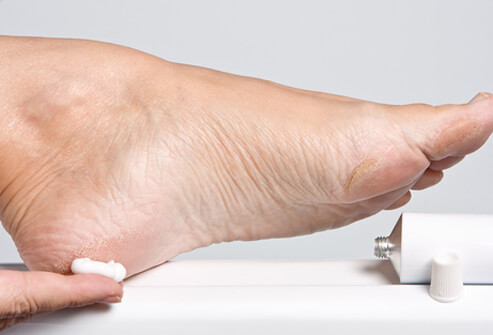
diabetes_foot_problems_s19_moisturize

One of the most common complications of diabetes is problems with your feet.  In particular, high blood sugars can cause damage to the nerves and the blood vessels in the feet, which can lead to more serious problems such as wounds and amputations.  It is important to keep good control of your blood sugars as this can prevent these changes from occurring.  If you are diabetic, it is important to have your feet screened yearly to check for any changes.

Victoria Sheard, Chiropodist

Contact us to book an appointment today!

Sprain vs Strain: What’s the difference?

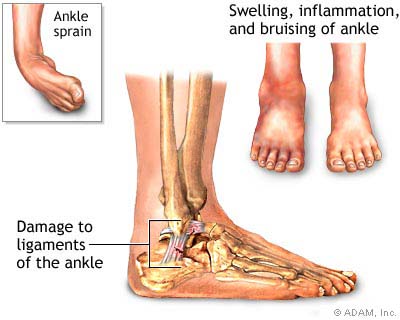
The signs of most sprains or strains are very similar: pain and inflammation, and sometimes bruising, at the injured area. The pain level varies depending on how bad the sprain or strain is.  The worse the sprain or strain, the harder it is to use the affected area.

ankle_sprain

The difference is what was stretched or torn to cause the pain.


A sprain is a stretch or tear in a ligament. Ligaments are bands of fibrous tissue that connect bones to bones at joints.


A strain is also a stretch or tear, but it happens in a muscle or a tendon. Tendons link muscles to the bones.


Daily exercise and stretching can prevent sprains and strains.  After you get a sprain or strain, it is important to care for the injury by doing proper exercises and stretching as suggested by your health care professional.  Please make an appointment with the RMT to discuss what works best for you, your body type, and/or injury.

John Li, RMT

Benefits of Vitamin C

The-Health-Benefits-of-Vitamin-C-Why-its-good-for-you

We have all been told that consuming vitamins is essential for keeping your body healthy and to avoid colds. Did you know that Vitamin C in particular is essential for our daily life? Here are some of the many benefits you can get from Vitamin C:

  1. Stress: Research has shown that vitamin C was beneficial to individuals whose immune system was weakened due to stress. Vitamin C is one of the nutrients sensitive to stress, and is the first nutrient to be depleted. Having Vitamin C in your system will help you keep a more positive attitude and reduce the anxiety associated with stress.
  2. Stroke: Did you know that people with the highest concentrations of vitamin C in their blood are associated with 42% lower risk of getting a stroke than those with the low concentration. In these cases Vitamin C helps maintain proper circulation.
  3. Bodily Repair: You need Vitamin C to repair your tissue, skin, cartilage, tendons, ligaments, and blood vessels. It’s essential for healing wounds, and also aids in repairing bones. It is clear that without Vitamin C in our systems our bodies would not be avail to sustain proper functionality.