End of Summer Diet Clean up

Welcome to September! As we mark the end of summer and bbq season, a few of you may be unhappy with the scales! Fall is a wonderful time to get back to a healthy nutrition plan and shed bad habits and extra pounds. Here are a few basic tips to transition back to your healthy routine:
Increase your daily water consumption. 8 glasses a day is recommended to help detox and additional toxins you may have accumulated over the summer. Water will also help manage hunger cravings.
Include lean protein in your breakfast to help stabilize your blood sugar and set you up with energy for your day, a fruit smoothie made with yogurt, egg whites, or nuts and seeds added to oatmeal.
Increase fresh fruits an vegetables not only with your main meals but also as snacks to limit your intake of processed foods. Your daily consumption should be minimum 5, aim for 8-10!

Change your habits, replace your 3pm coffee or cookie with a brief walk or breath of fresh air.

Keep a food log. What you eat and what you think you have eaten often differ!

Schedule a Fall clean up with me and we will work together to create a Nutrition and Lifestyle Protocol just for you!

Get back to the gym and increase your exercise! Maintaining a healthy weight and lifestyle is much easier when exercise is part of the recipe.

In good health,

Mary



How well do you warm up

What do you do when you warm up?

Studies now show that dynamic warm ups (DWU) are better than static stretching (SS) and no warm up (NWU).  DWU have been shown to decrease injury rates and performance compare SS and NWU groups.  Conversely, some studies have shown that static stretching can decrease performance on tasks such as vertical jump.

Dynamic warm ups should feature progressive and continuous movements.  The goal of a DWU should be to: increase the suppleness of muscles and tendons, increase blood flow to the arms and legs, increase body temperature and enhance free coordinated movement.

An example of a dynamic warm up  can be body weight movements where intensity is progressively increasing.  For example, squats, airplanes, lunges, pushups, step ups, jumping jacks.  These exercises can also be paired with running drills – i.e. Track A’s, B’s, C’s.

Dr. Paul

Importance of Proprioception in Rehab

What is it?
Proprioception is the sense of relative position between joints and body parts. This sense allows us to know where our limbs are in space subconsciously. It is very important in all every day movements but it is especially important in sports where often complicated, precise and coordinated movements are required.

How does it work?
Proprioception system is made up of sensory receptors in our muscles, tendons and joints. These sensory receptors pick up information regarding tension and stretch of tissues and send this information to your brain. The brain processes this information and automatically sense motor signals to adjust your muscles contraction or relaxation to achieve your desired movement.

Why is it important in rehab?
After an injury, especially if you have been immobilized, these sensory receptors can be impaired leading to a deficit in your proprioception system. Just like a muscle can shrink or atrophy from disuse, these sensory receptors can lose function if they are not being used. With an impaired proprioceptive system, your coordination is decreased leading to hindered athletic performance and a greater change of reinjury. It is the second injury following the initial injury that often causes more severe consequences.

There are ways of redeveloping your proprioception safely and it is a must if you sustained any lower limb athletic injury. Please feel free to contact the health care professionals at Form and Function to find out more about proprioceptive training following injury.

Manni Wong
Registered Physiotherapist

Tips for Exercising in Summer Weather

Summer is here which means there will be plenty of heat and humidity outside. Here are some tips to stay on top of the summer weather during your outdoor activities/exercise:

Stay hydrated. Drink water regularly and do so before you get thirsty. Drinking water when you are thirsty is often too late if you want to have peak performance outdoors in the heat. Also, sweating is essential for cooling off but it also causes loss of fluids. Replenishing these fluids help you stay cool.

Stay cool. Wear lighter colours and breathable clothing. Lighter colours reflect the sun and cause less heat absorption. Breathable clothing allow for more evaporation and thus cooling. Also, take breaks to find shade from the sun. Too much direct sunlight can cause your body to overheat which can lead to severe problems.

Stay aware. Be conscious of how you are feeling. If you feel fatigued, dizzy, nauseated, weak and/or experience muscle cramps, TAKE a BREAK from the sun. If you don’t, you may risk developing heat stroke which can be life-threatening. If these symptoms are prolonged or severe, you may need to go to the ER.

Plan ahead. Be sure to look at the weather forecast and prepare for it. Know that increase humidity means less possible evaporation so you do not cool off as fast through sweating. Know the peak heat times are usually in the afternoon so plan vigorous exercises for morning or evening times.

Stay fit. Having a base level of fitness is important if you plan to do activities outdoors in the heat. Your body tends to adapt quicker to the environment if you are more fit. If you plan on starting or returning to exercise, especially outdoors in the heat, come in to Form & Function for a fitness screen and an individualized exercise plan. Doing exercises correctly and with the right parameters is important in getting the most out of your exercise plan.

Take care and enjoy the summer weather!

Manni Wong
Registered Physiotherapist

Squat like a baby

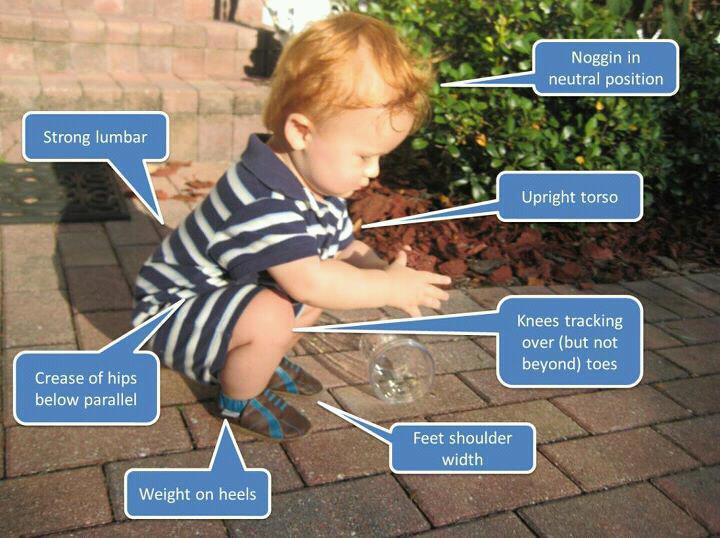
I would argue that how baby squats is how we were meant to.  Through our childhood development we squat this way and we are not told how to.  It is part of our DNA and we all do it.  As we learn to sit on chairs and couches, I would say that we slowly lose this natural ablility.

Many of us would have trouble getting down in this position due to stiff hips, knees and ankles.  However, many of us should be able to.  Try lying on your back, can you bring your knees to your hip level?  If yes, you should be able to squat that deep as well.  In this case it is not because of your joint stiffness, it is because you can’t control your body segments to allow you to get into this position.

One simple observation is that many people squat with their knees and not their hips.  When I test people I will see their knees dive forward, when their hips should go back.  Many people have bad knees because they use their knees way too much and should use their hips.

Watch how a baby will shift weight into his/her heels and drop down into the hips, not forward into the knees.  Also, most babies will keep a great spine position and not round their back.  Why can a baby do this and we can’t?  Part of the reason is that we tend to lose automatic control of our deep spine stabilizers that control our spine position.  However you can get it back!

The squat is such a fundamental movement of everyday life.  It is how we sit on chair, get off the toilet and how we get to the floor.  Many times the problem is how people squat and not because of their knees and back.  The trick is to use other muscles (i.e. core) and joints (i.e. hip) to help.  This movement is a pattern and you can retrain it.  I have helped many patients get their squat back.

Dr. Paul

baby-squat

The Warm Up

As the weather (finally) warms up, here are some pointers on warming up for that upcoming season of softball, tennis, golf or whatever activity you like to do.

I don’t know about you, but I grew up in a time where “warming up” meant sitting around in a circle, statically stretching various muscles (remember gym class?) However, this view has changed.  The current view on warming up is to do it dynamically, that is through movement and not through static holding of stretches.  It has been theorized that static stretching actually reduces muscle activity and force.  Why would you want that before doing an activity?

Also, warming up is important in priming your body for activity.  It is meant to initiate muscle activation, lubricate joints and gradually prepare your cardiovascular system for the upcoming task at hand.  All of these things help minimize injury.  Physiologically, you know this is achieved when you start feeling warm (hence the name) and start sweating.  Light perspiration is a sign that your body is getting ready to go!

So how do you dynamically warm up?  Here is a good routine to follow.  It should take roughly 5-10 minutes.  Use a line to do the warm up (ie baseline of tennis court, 1st to 2nd base on softball diamond, etc).  Go back and forth on this line (real or imaginary) twice for each exercise.

  • Walking lunges
  • High knees
  • Heel kicks
  • Side shuffles
  • Crossovers
  • Side lunges
  • Toe touches
  • Walking lunges + reach/twist (one or all of the options)

If you do not know what some of these exercises are, I will be posting a video with this routine soon.  So get warm and enjoy your sporting endeavors!  Happy Spring!

Manni Wong

Registered Physiotherapist

Relieve Neck Pain by Proper Breathing

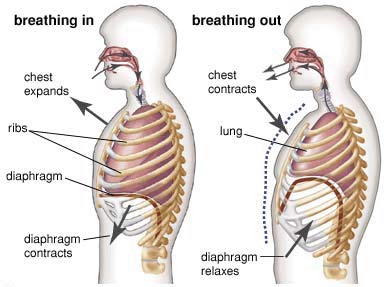
Breathing with our diaphragm has been shown to reduce activation in some of the bad posture muscles such as the scalenes and upper trapeziusbreathing. Those muscles are typically the overactive muscles seen in people with chronic neck pain and bad posture. A great way to relax those muscles is by simply working on utilizing your diaphragm when breathing. You will want to make sure that you are expanding your stomach, as well as your ribs laterally when taking in a deep breath, instead of lifting your chest. Try putting one hand on your belly, and the other hand on your chest, and take 10 deep breaths without lifting your chest. This is a great way to relax those bad posture muscles, activating your diaphragm, while reducing stress.